
by Scott Olsen
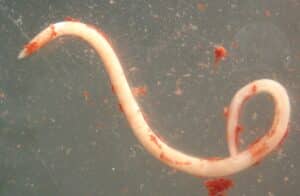
Sushi can be an elegant, healthy meal—but raw or undercooked seafood can carry parasites. The risk can be lowered if restaurants follow proper seafood-handling and freezing practices, yet that could be like Russian roulette. The best-known sushi-associated parasite is Anisakis, a tiny marine roundworm whose larvae can survive in fish or squid until eaten by a person.
Anisakis: the “herring worm”
Anisakis larvae—also called herring, cod, or seal worms—are threadlike nematodes found in certain marine fish and squid. After contaminated raw seafood is eaten, a larva can attach to the stomach or intestinal lining. Unlike in its normal marine-animal hosts, it generally cannot complete its life cycle in humans; however, its attempt to burrow into tissue can trigger dramatic inflammation. *1
Symptoms may begin within hours: abrupt upper-abdominal pain, nausea, vomiting, bloating, diarrhea, and sometimes blood or mucus in stool. A person may even feel a strange tingling in the throat or mouth while eating—potentially the sensation of a live worm moving. In some cases, Anisakis provokes hives, itching, or rarely anaphylaxis, a life-threatening allergic reaction. *2
If larvae reach the bowel, symptoms may appear one to two weeks later and can resemble appendicitis, peptic-ulcer disease, food poisoning, or inflammatory bowel disease. The resulting inflammatory mass—called an eosinophilic granuloma—can cause prolonged pain, and intestinal perforation, while rare, has been reported. *1
Tapeworms and Other Risks
Raw freshwater or anadromous fish can also transmit fish tapeworms, such as Diphyllobothrium species. These infections may cause vague abdominal discomfort, diarrhea, fatigue, and passage of worm segments. Some broad fish tapeworm infections can contribute to vitamin B12 deficiency and anemia over time.
Parasites are not the only concern. Raw fish may also expose diners to bacteria or viruses when food is mishandled. “Sushi-grade” is largely a marketing label, not a universal guarantee that fish is parasite-free.
Reducing the Risk
Proper freezing is the key control for parasites in most fish meant to be eaten raw. Food-safety guidance recognizes methods including holding fish at −4°F (−20°C) for seven days, or using much colder freezing conditions for shorter durations. These methods kill parasites but do not fix poor hygiene or spoilage. *3
Choose reputable restaurants, avoid raw seafood from uncertain sources, and seek urgent medical care for severe abdominal pain, persistent vomiting, facial swelling, breathing trouble, or widespread hives after sushi. Sushi is usually safe when professionally sourced and handled—but raw seafood deserves respect, not blind trust.
- https://www.cdc.gov/dpdx/anisakiasis/index.html
- https://www.cdc.gov/anisakiasis/about/index.html
- https://www.maricopa.gov/DocumentCenter/View/40570/Parasite-Destruction-Guidance-PDF-Archived
